Do they even lase? Definitive ranking of Steven Universe gems by a laser scientist


In the Steven Universe cartoon series, most of the characters are some kind of space alien gem or semi-precious rock. They don’t just use the best-known gems, but dig deep into the collection drawers to pull out azurite, chalcedony, various kinds of agates, and even some questionable “gems” like flint.
This raises the question (or at least it does for me): which of the gems would make good lasers?
I’ve grouped the gems into four categories according to their pew-pew prospects, starting with:
D-tier
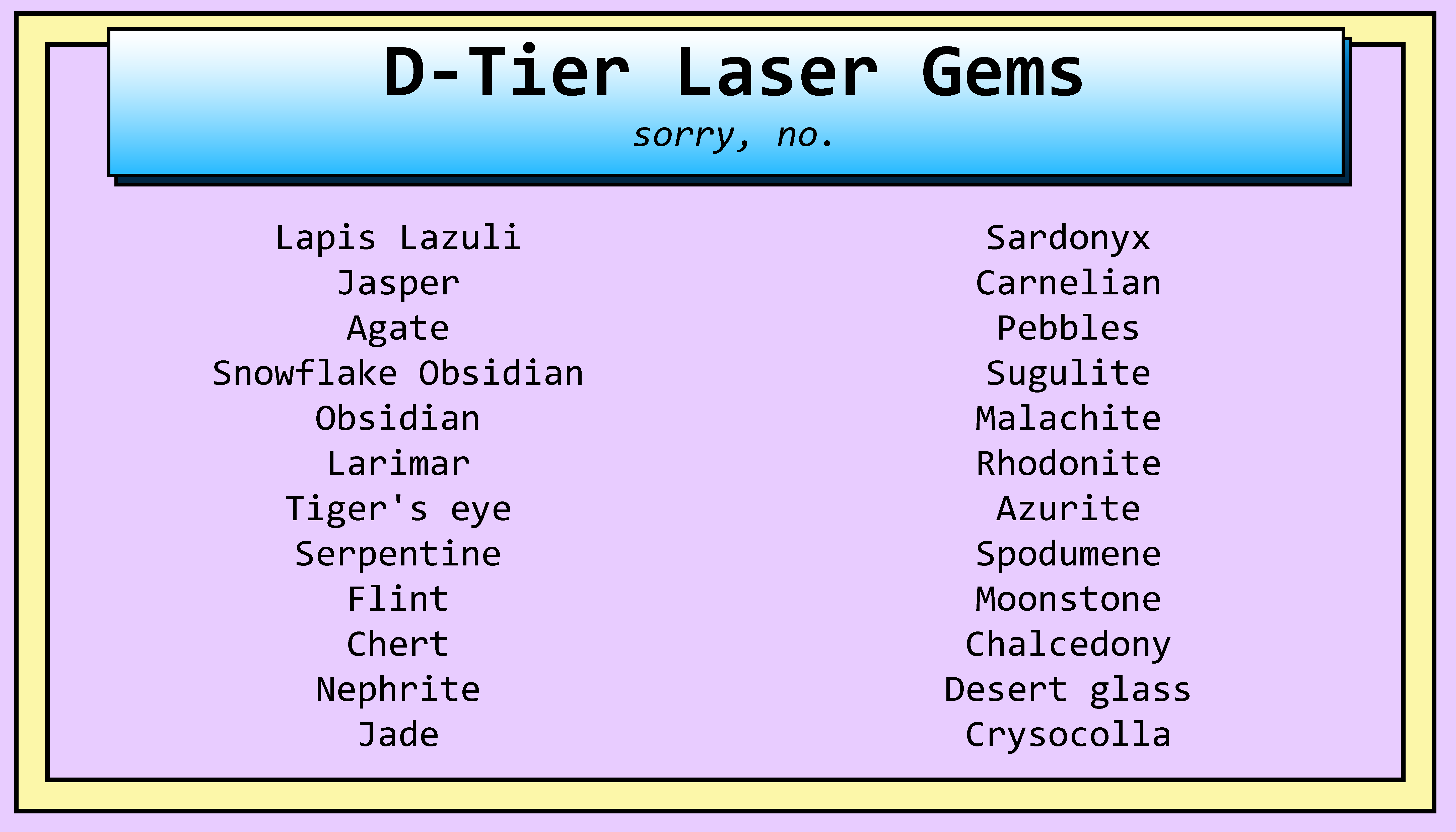
Sorry, no. Here’s the thing about laser materials: light has to be able to travel through them. If it transmits light about as well as a brick, there’s no way for light to survive and get stronger inside the gem. Even if the rock is a bit translucent, that’s not good enough. Light will scatter away before it has a chance to form a strong laser beam.
These are your D-tier gems. They might be pretty rocks, but that’s about it.
C-tier
At least these gems are clear and crystalline, so they won’t stop a growing laser beam in its tracks. It might be possible to make a laser from these, but I don’t know of anyone who’s done it. A laser gem needs the ability to store energy and later release it as identical copies of the light that hit it. (This ability is called stimulated emission, and it’s the SE in LASER.) Likely these gems can’t do stimulated emission at all, or are really terrible at it.
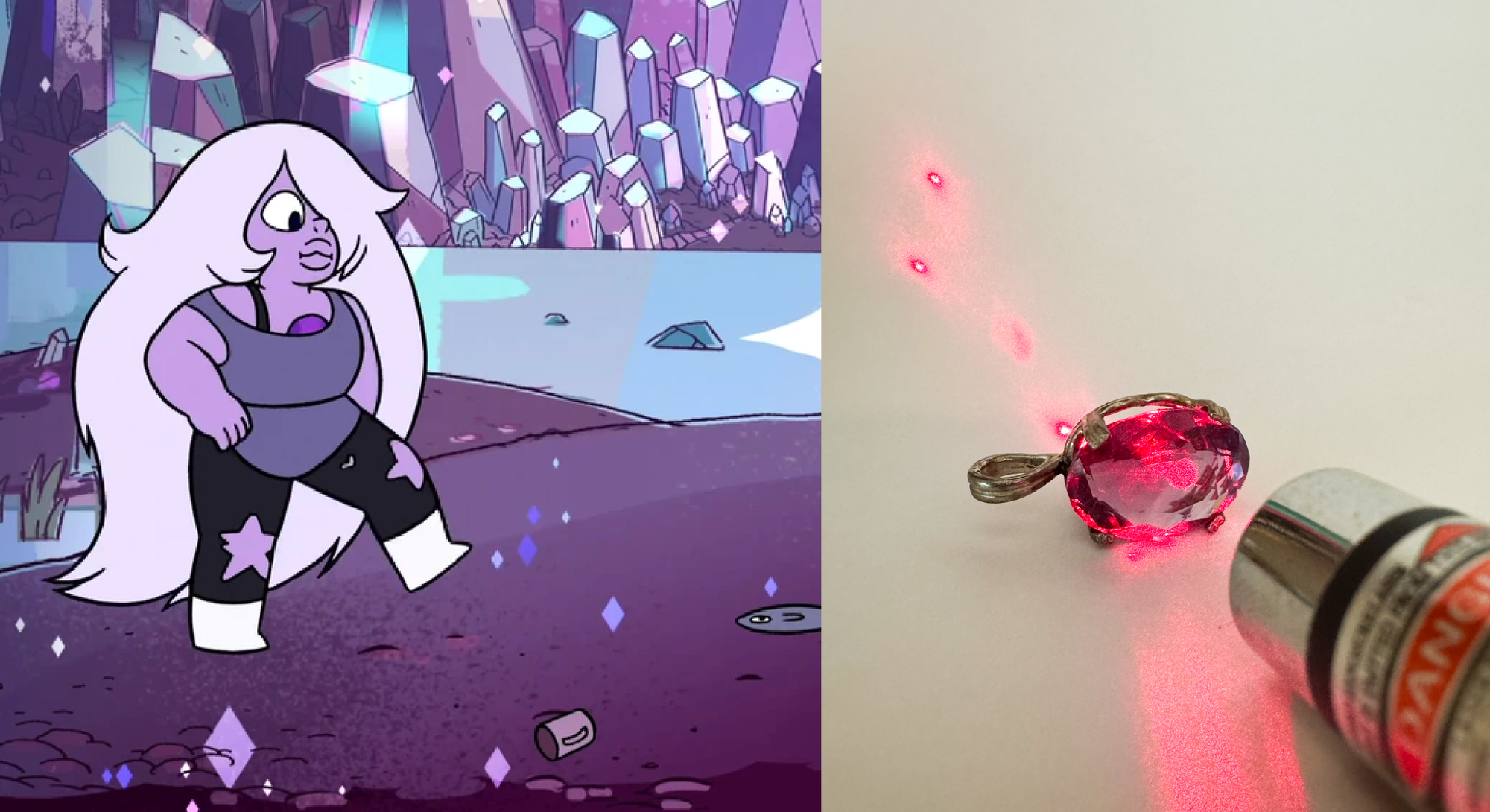
Here are the C-tier laser gems. I’m sure they’re trying their best.
B-tier
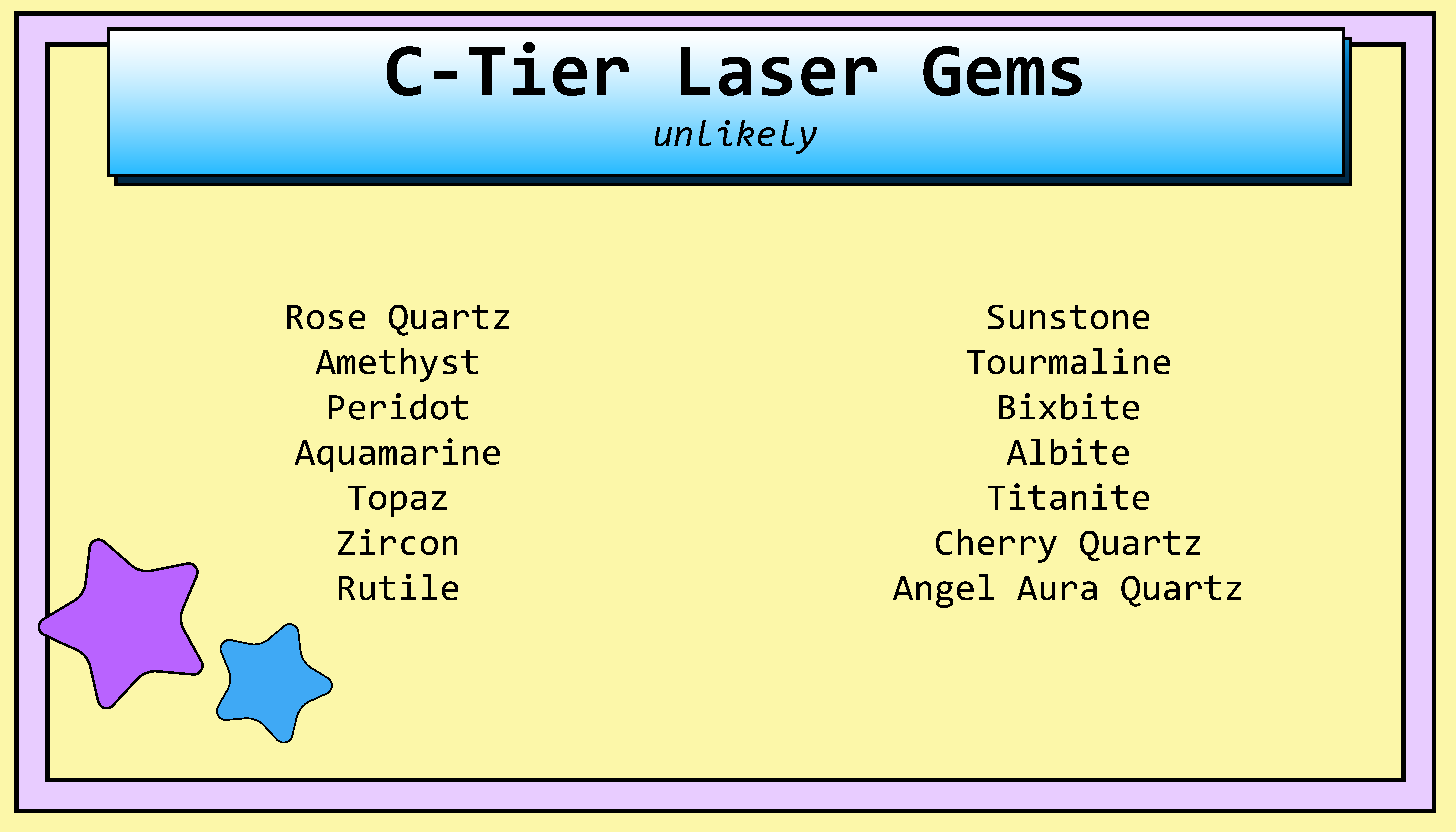
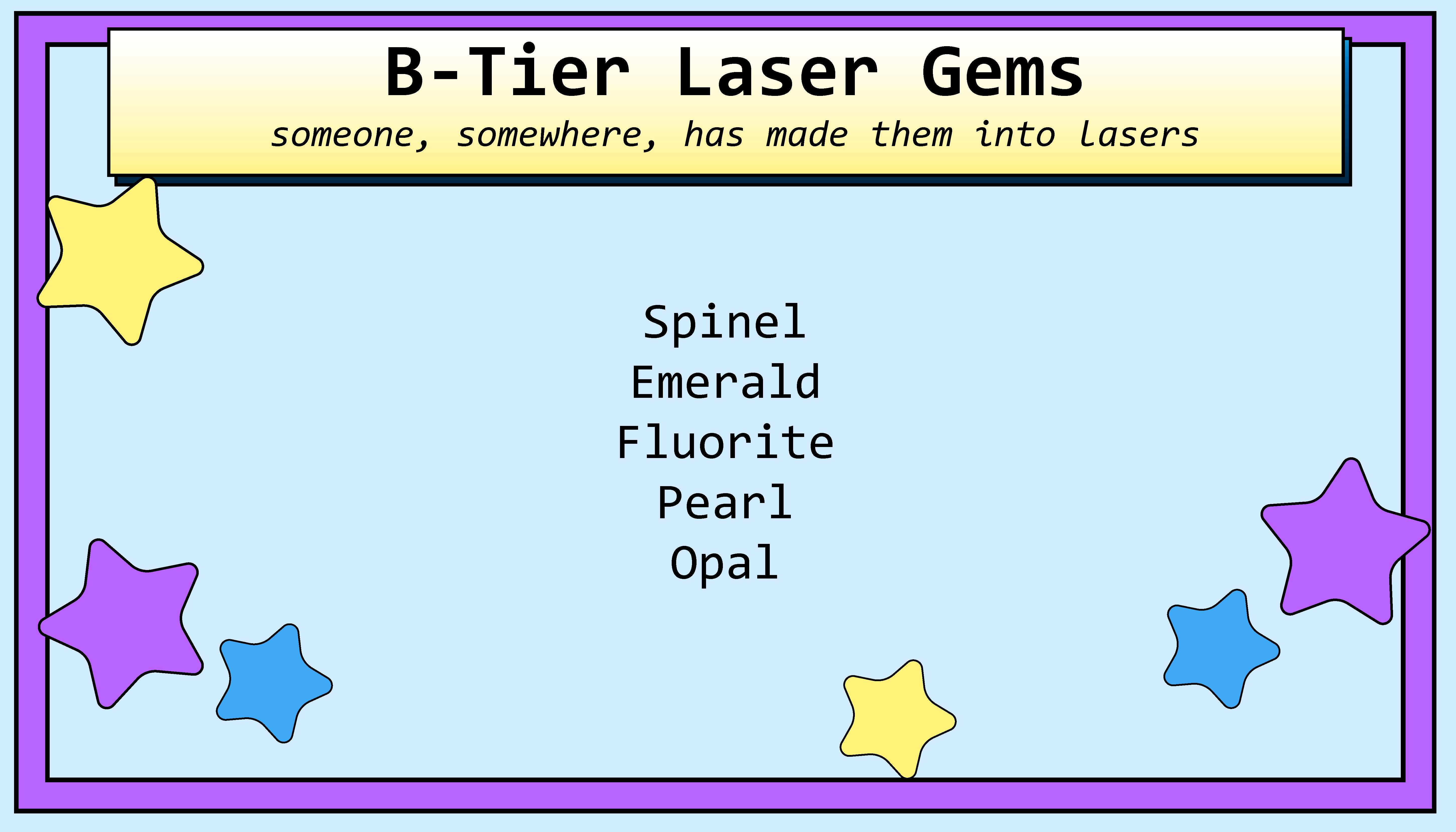
These are bona fide laser gems. They may not be the most popular laser materials, but at least some researchers have managed to make lasers out of them. They’re clear enough not to kill a growing laser beam, and they have some ability to do stimulated emission (or to host a material that can do stimulated emission). I’m presenting them from least to most promising.
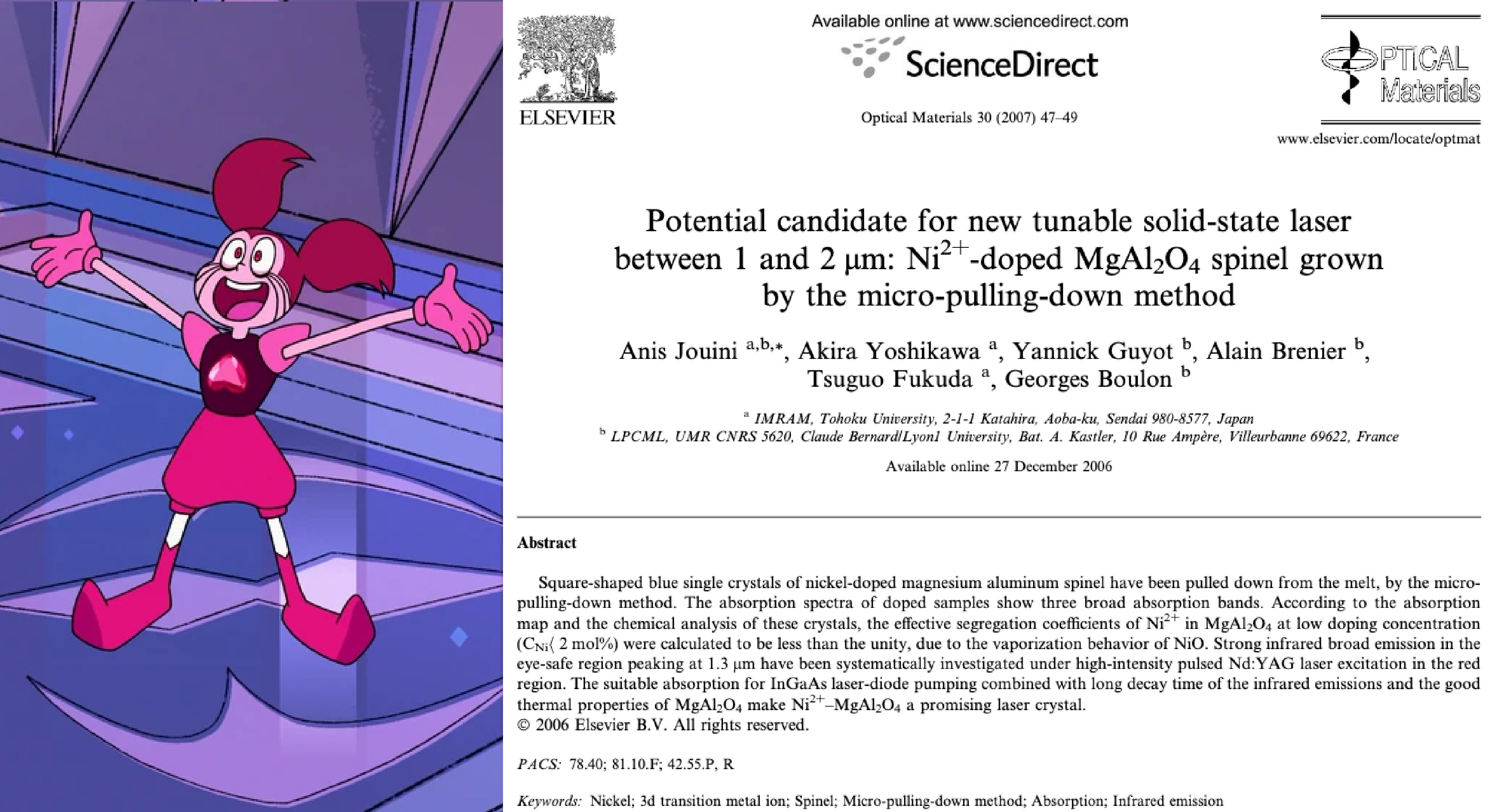
Spinel
She barely makes the cut as a laser material. A couple of papers over the years have looked into spinel as a laser material and shown some promising properties. The fact that they didn’t follow with more papers or lasers probably means that spinel was a pain to work with for some reason.
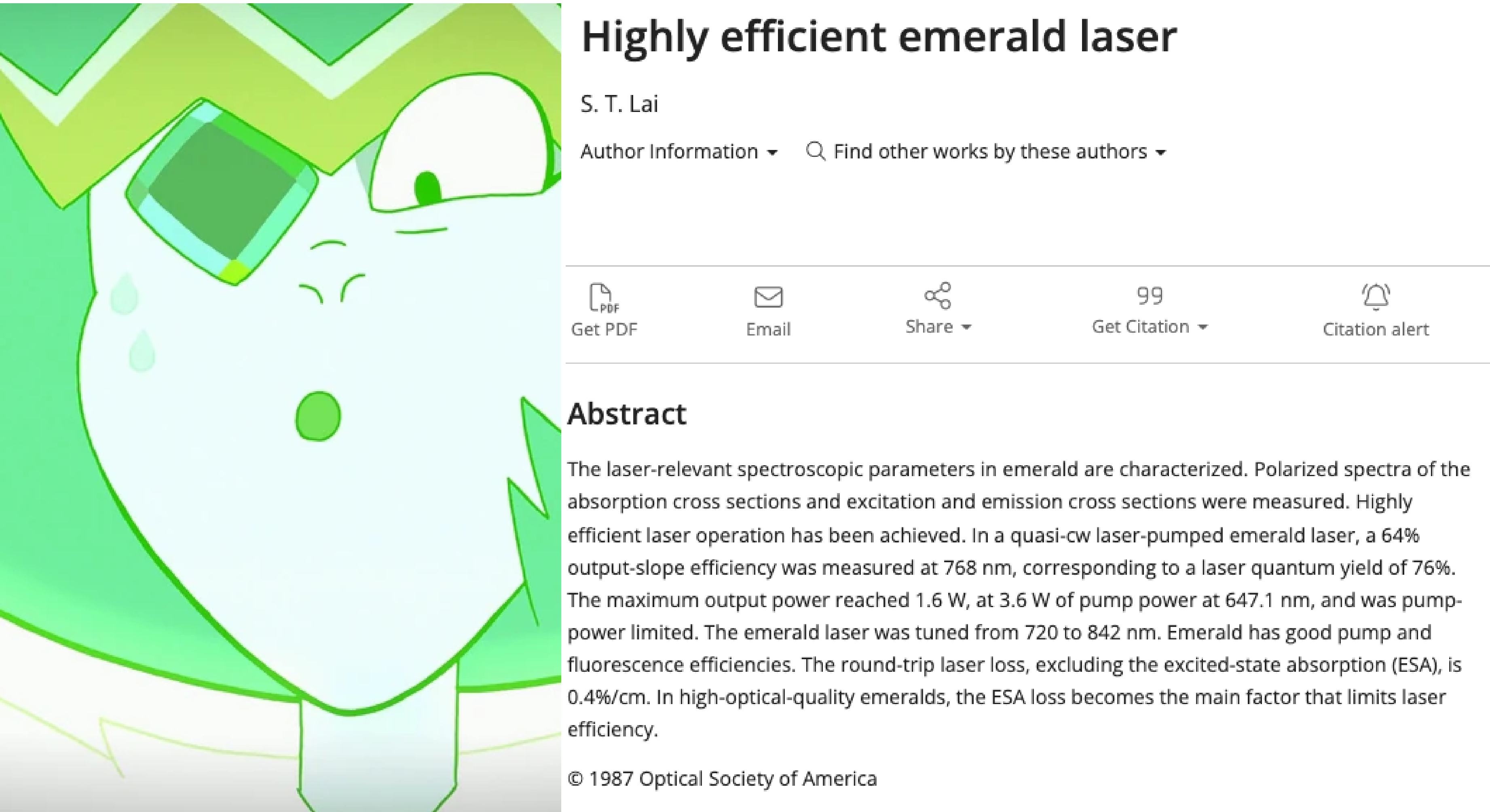
Emerald
I found a couple of papers from the 1980s that made lasers from emerald, but they must not have been very good ones because I’ve found nothing since.
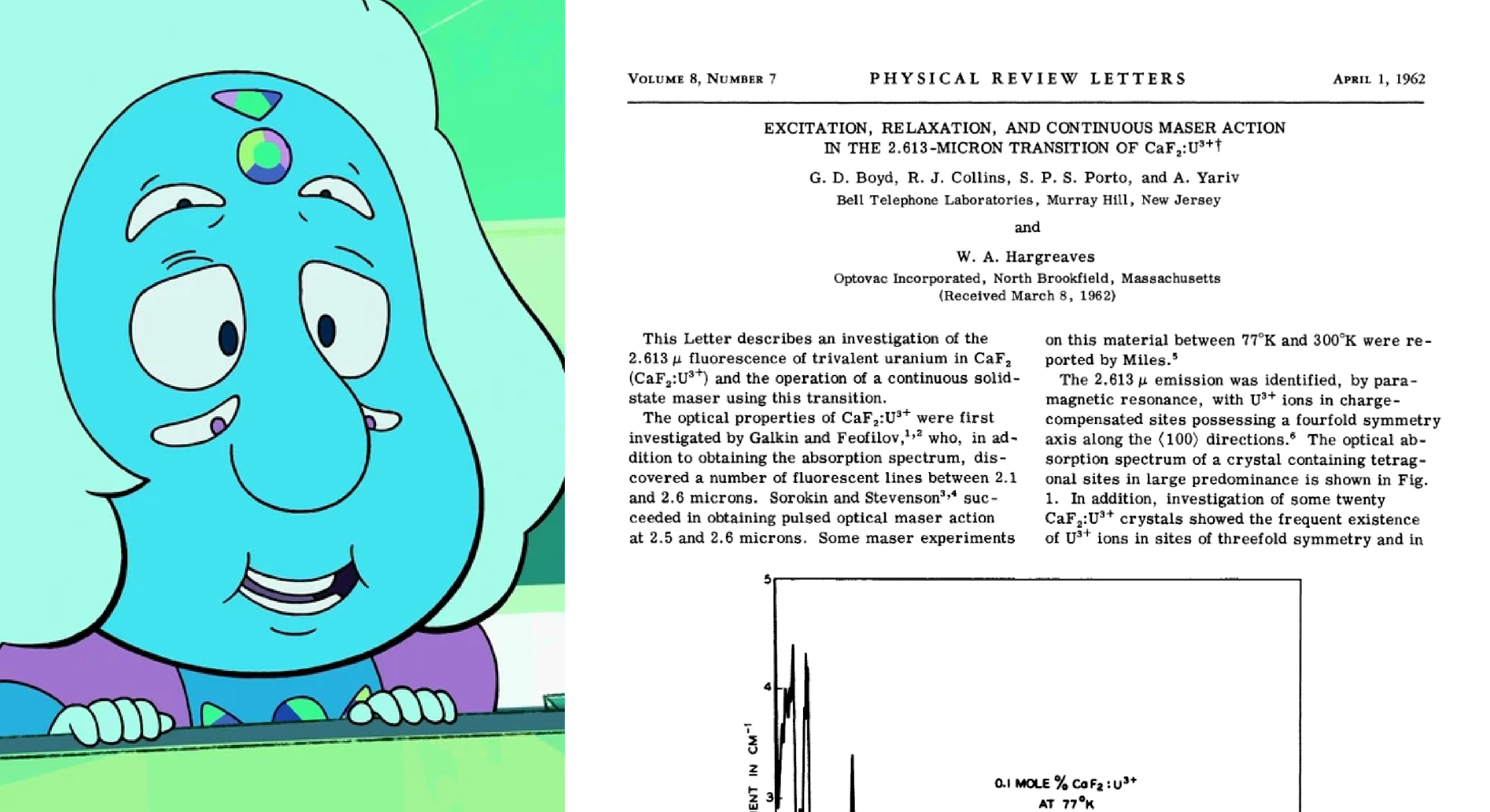
Fluorite
One of the first laser crystals was fluorite with uranium added! It didn’t work very well, plus, uranium. Fluorite is hardly ever used for lasers anymore, but it can be made into laser components like lenses and windows.
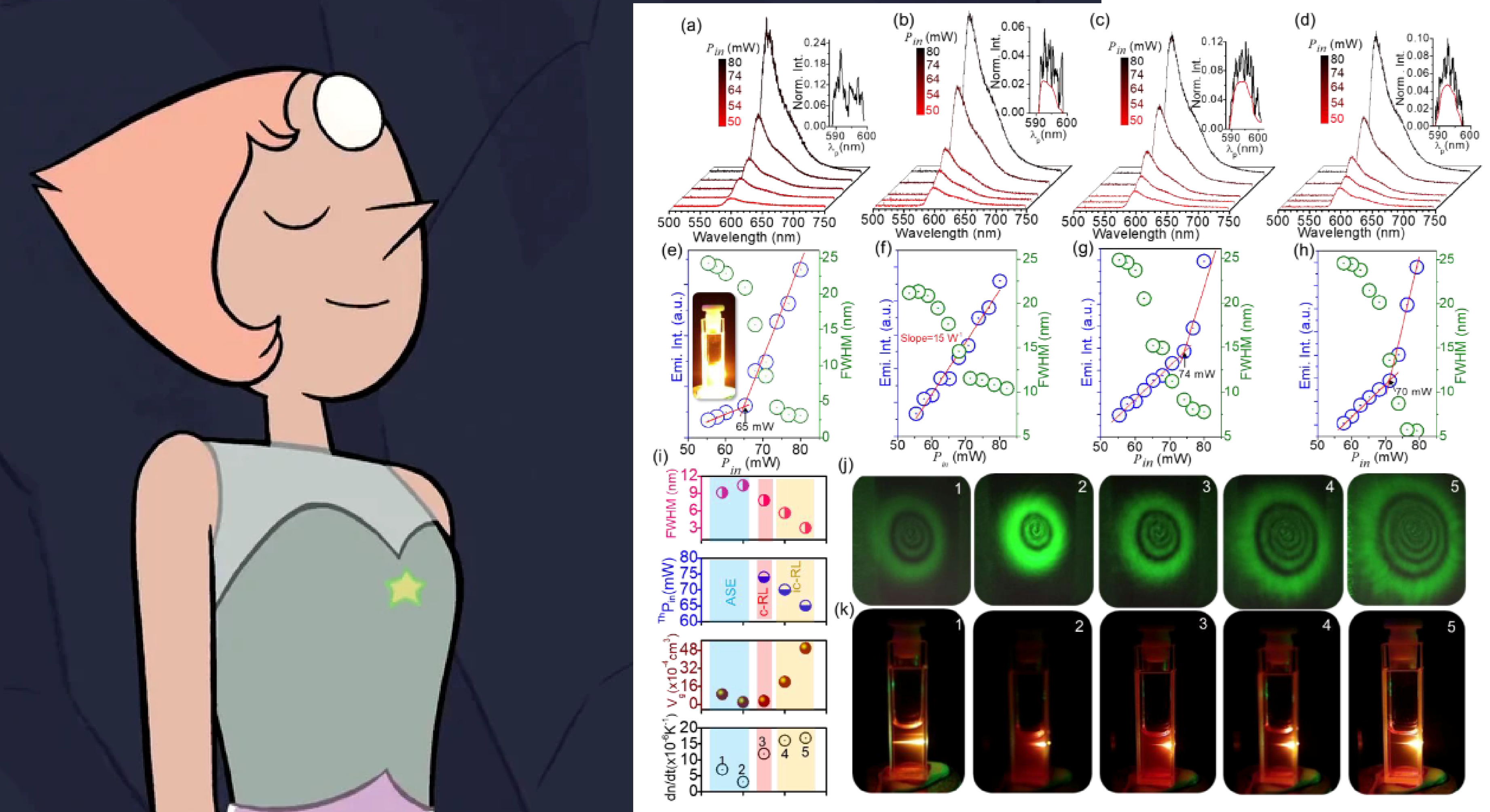
Pearl
This is a surprise answer. With Pearl’s cloudiness you would think she would be D-tier, but she has a regular microstructure (from all that time being built layer by layer inside a mollusk) that can help form a laser cavity. According to Mandal et al (2022) if you form her into a flat sheet and soak her with fluorescent dye, then energize her with a green laser, you can get yellow laser light out.
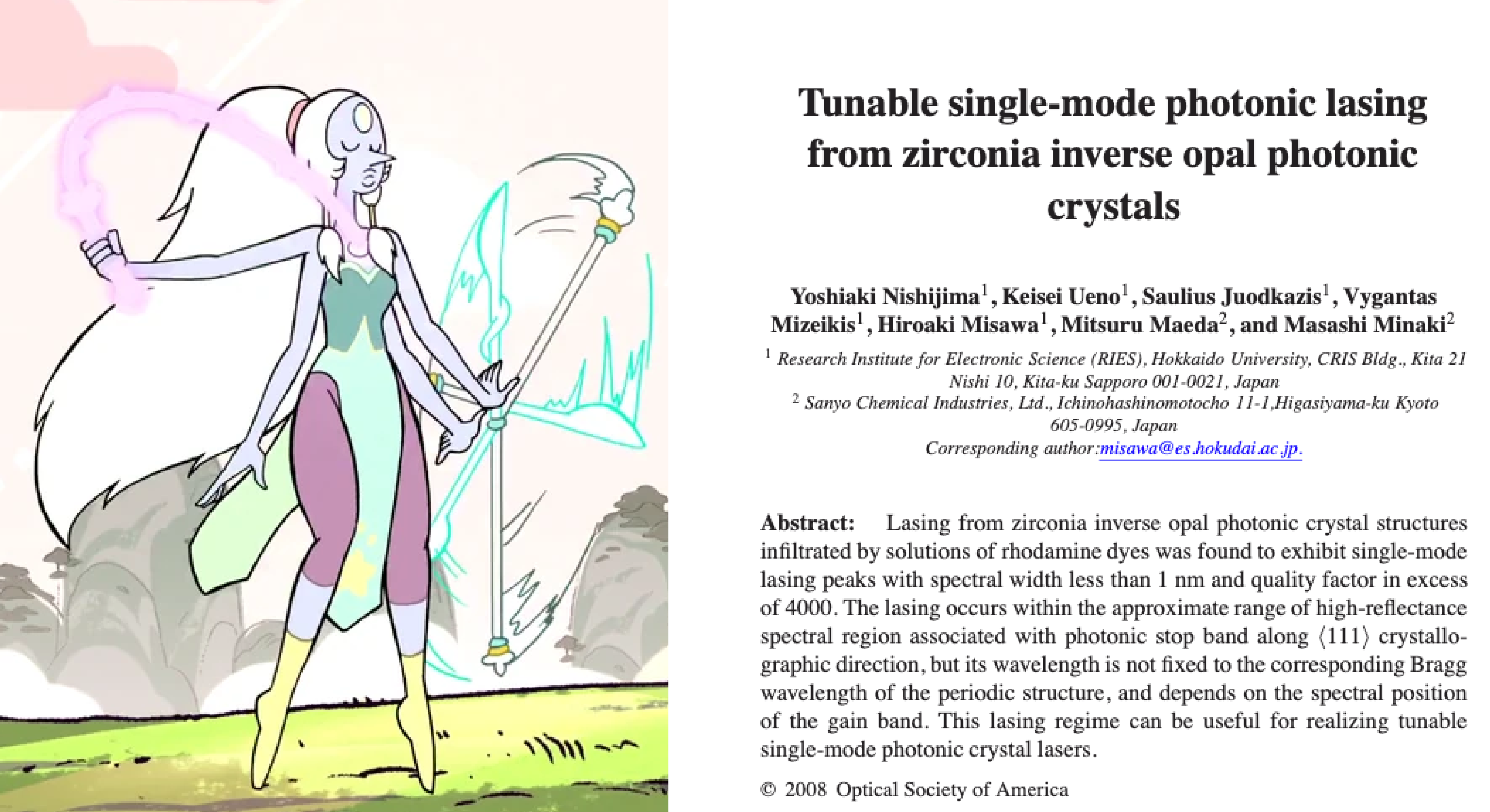
Opal
Similarly to Pearl alone, opal is cloudy but made of regular microstructures that can help make a laser cavity. Like with Pearl, you’d have to soak her with dye and energize her with another laser, but you might get some laser light out.
A-tier
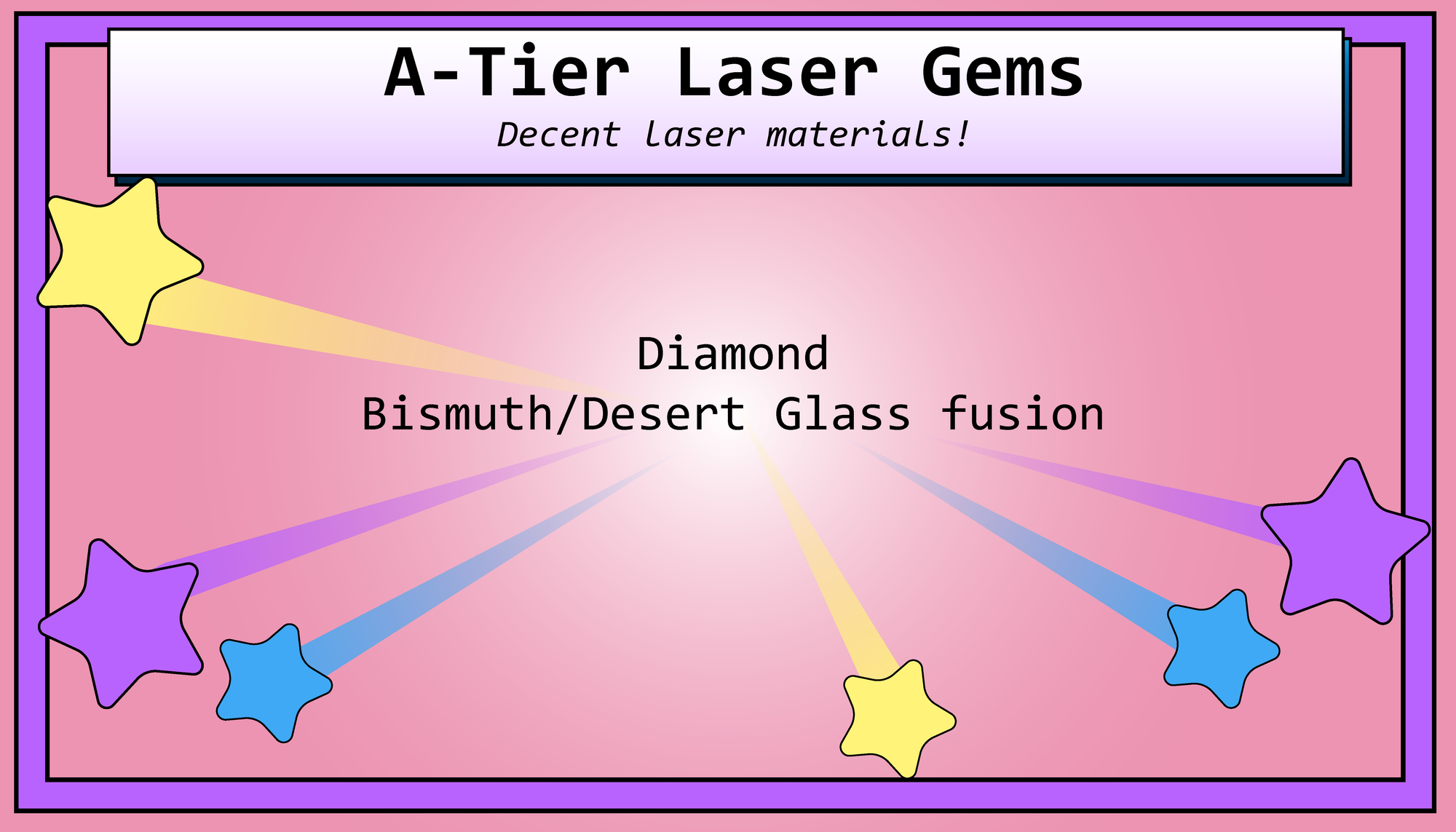
Unquestionably laser material, and they are promising as lasers. Even if they’re only in research labs so far, they have the potential to be more than scientific curiosities.
Diamond
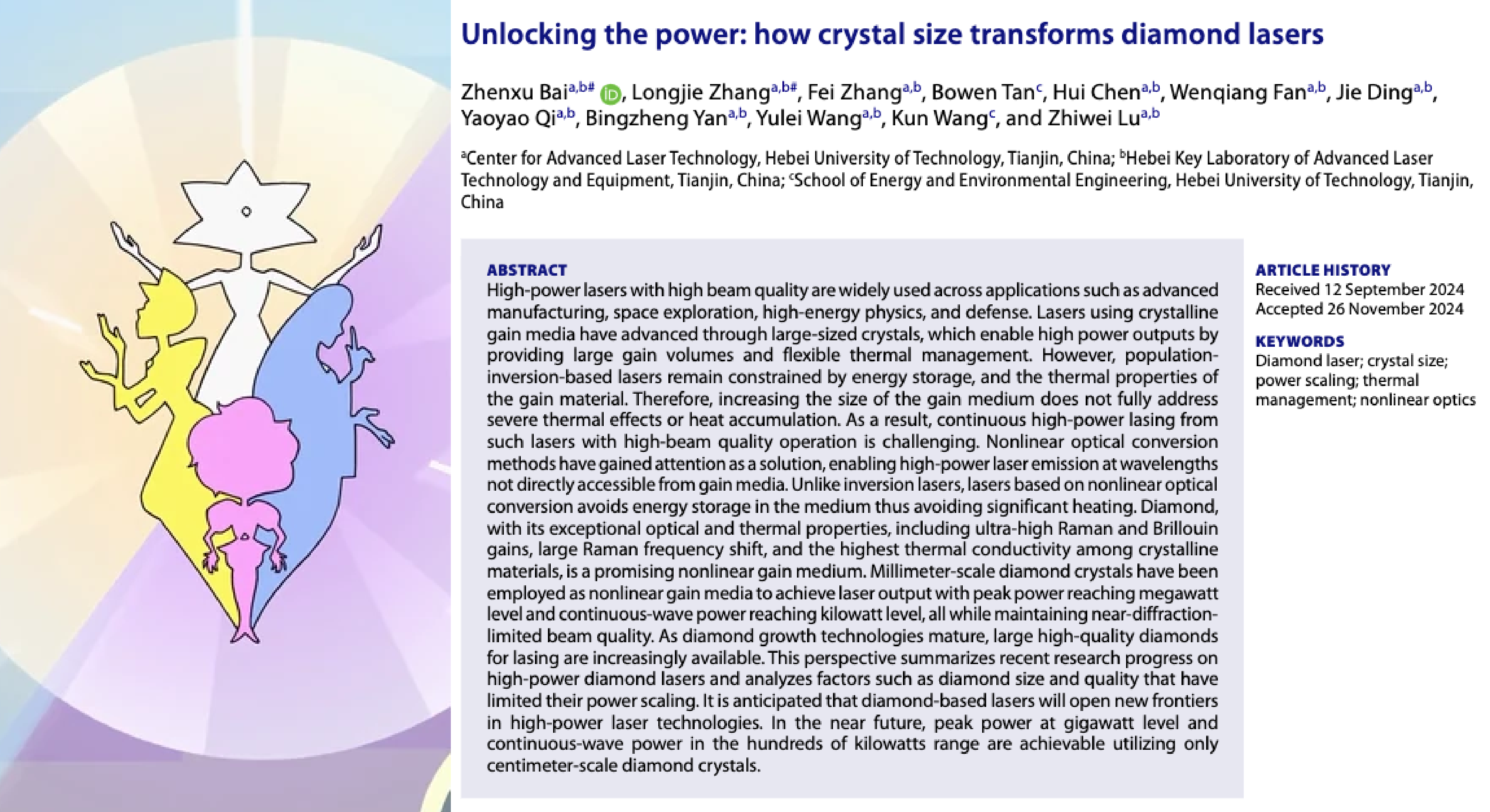
People have made lasers from diamond, though they’re still not very common. With their excellent thermal conductivity, the diamonds might one day make powerful lasers.
As-yet-hypothetical Bismuth – Desert Glass fusion
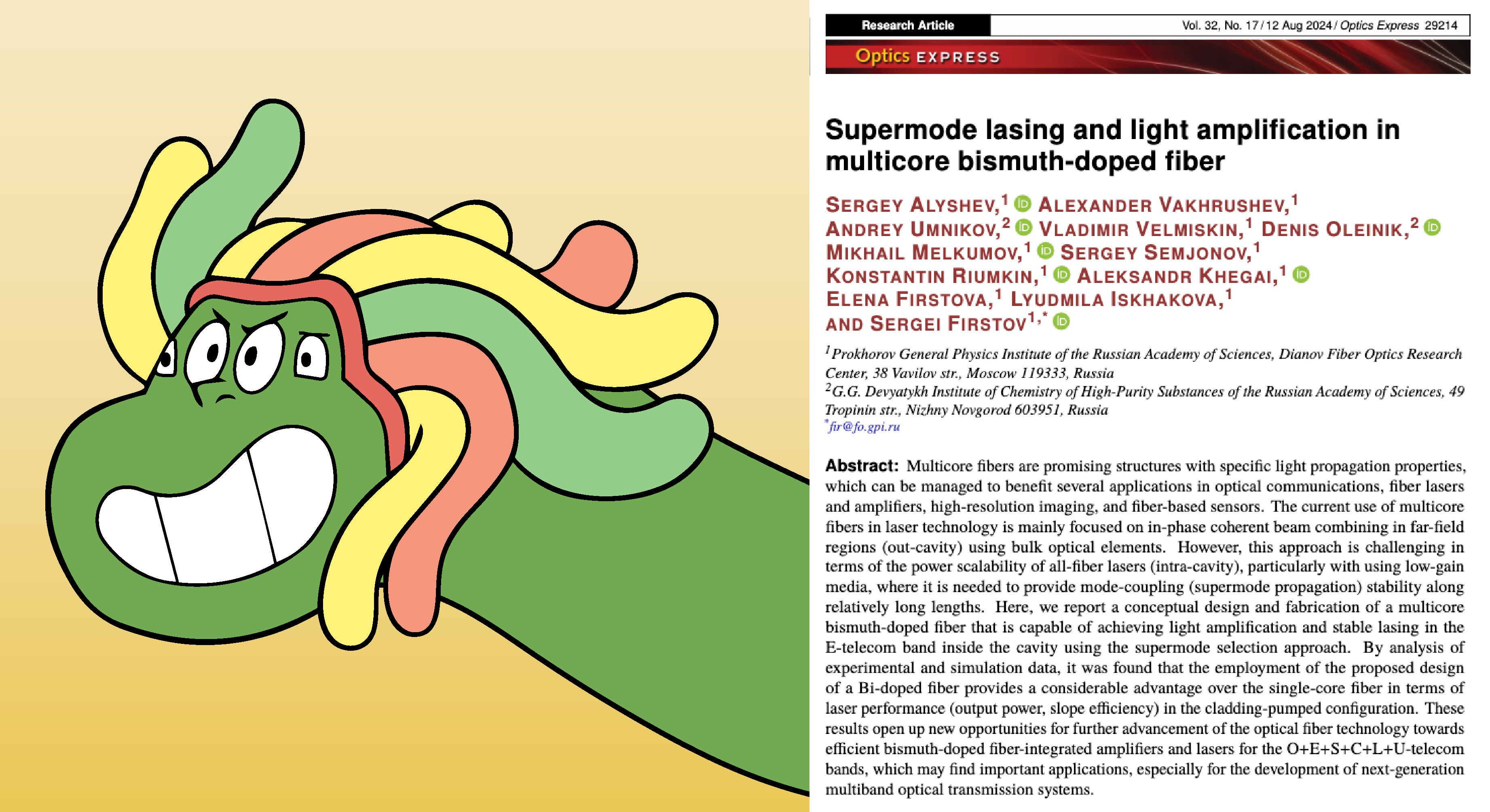
Bismuth is so opaque that you would expect her to be D-tier. But if she’s distributed throughout glass fibers, she can help turn them into infrared fiber lasers. So far they’re not common, but watch this space!
S-tier
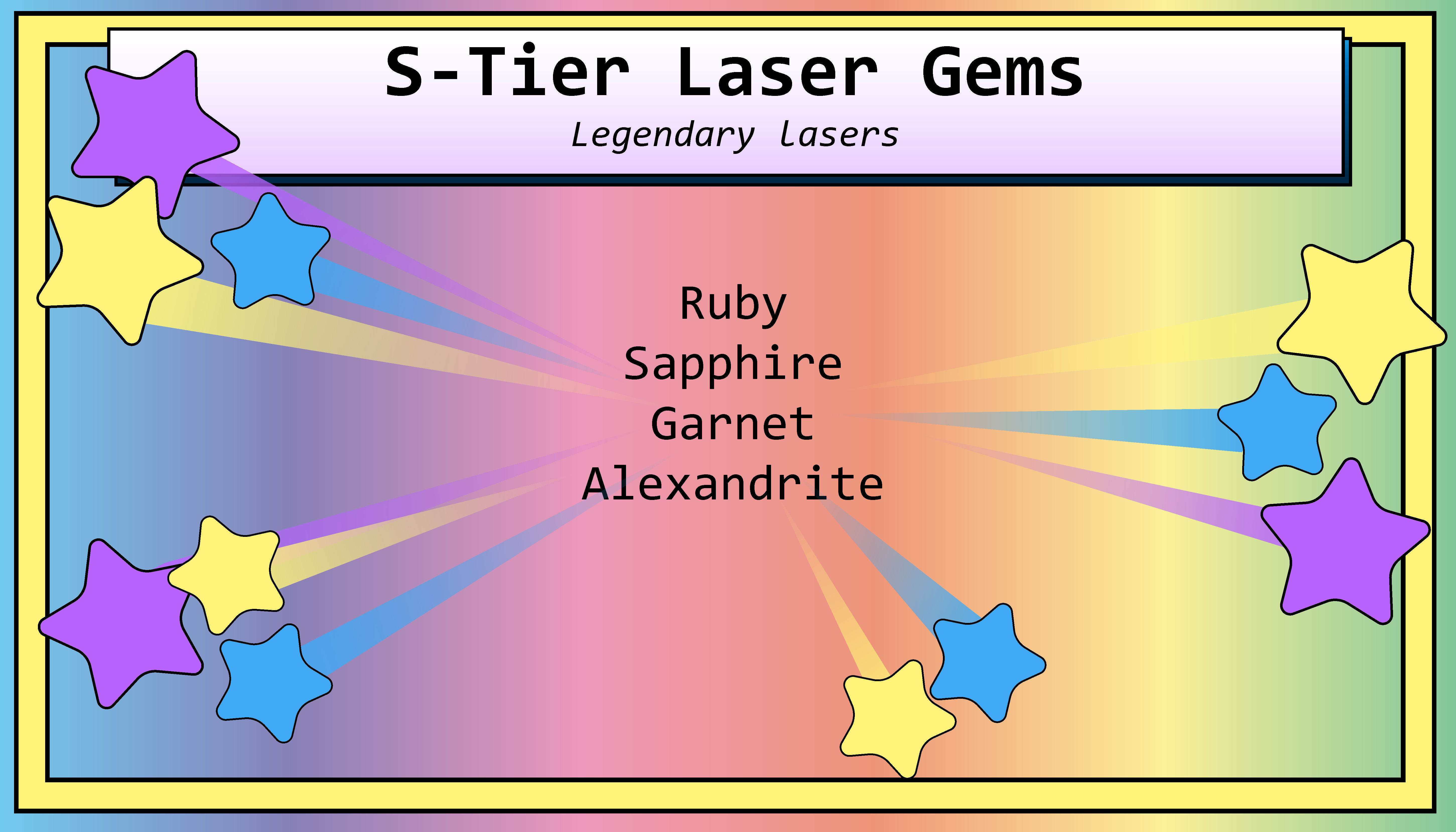
These are not only laser materials, they are legendary ones.
Ruby
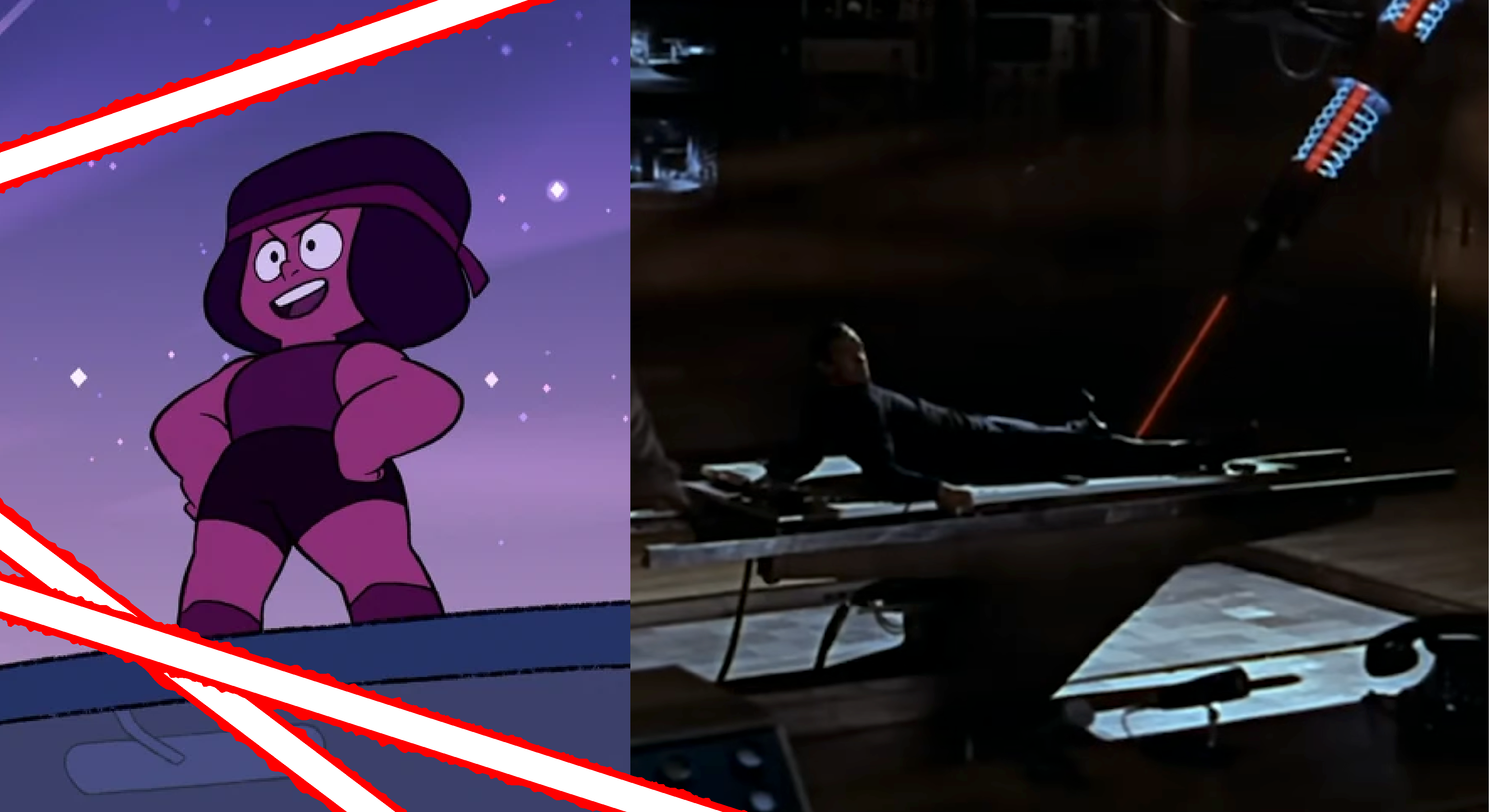
Quintessential laser gem. In fact, the first visible laser was made of ruby. The laser that was menacing James Bond in Goldfinger? Ruby. Emitting a gorgeous red laser beam and still useful for certain hair-removal procedures, Ruby has earned her place among top tier laser gems.
Sapphire
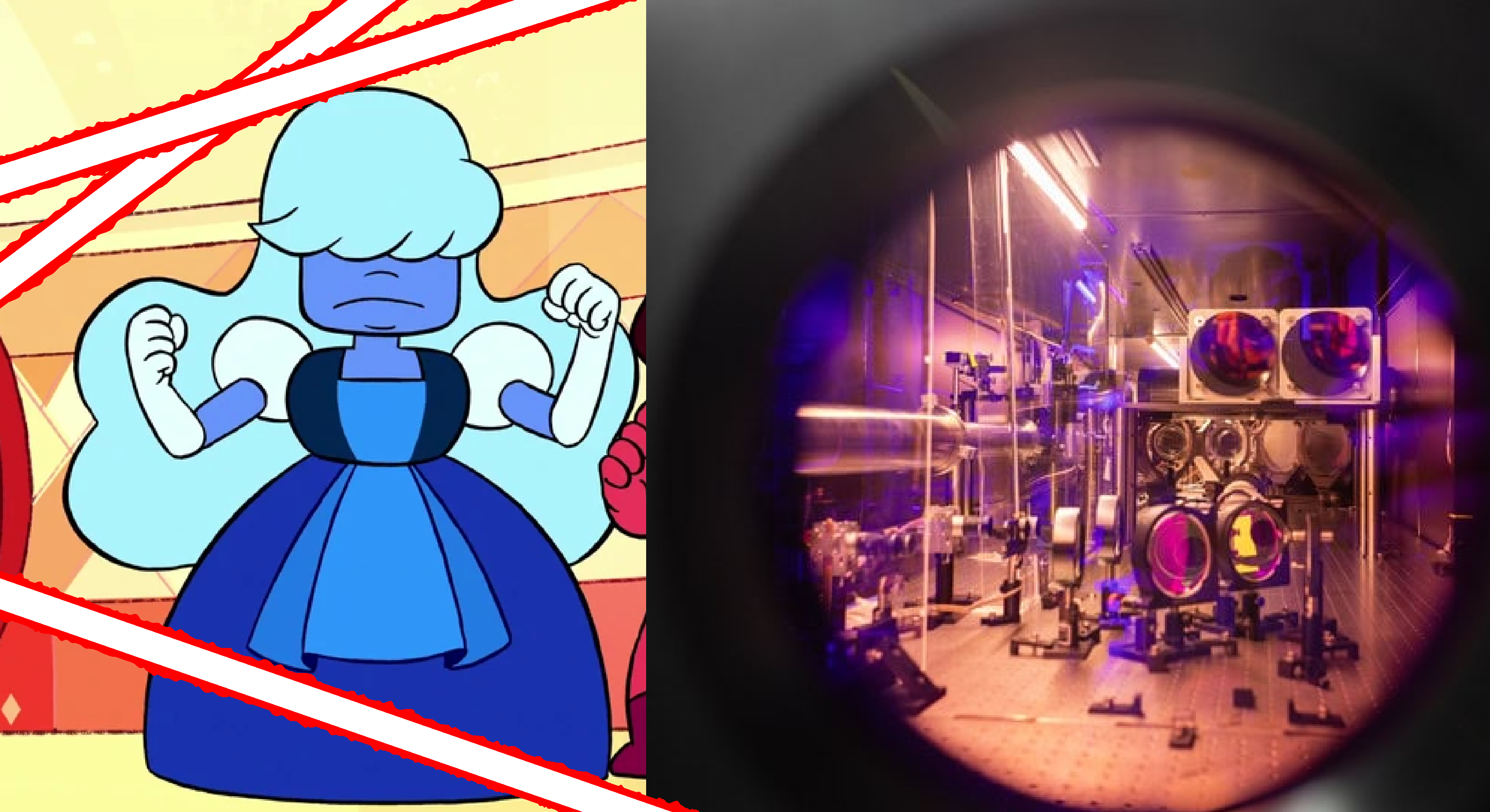
Some of the most advanced lasers are made of sapphire. Medical and research lasers made of titanium sapphire make pulses of light so intense that during the brief period of time they exist, they carry more power than the world’s power plants combined.
Garnet
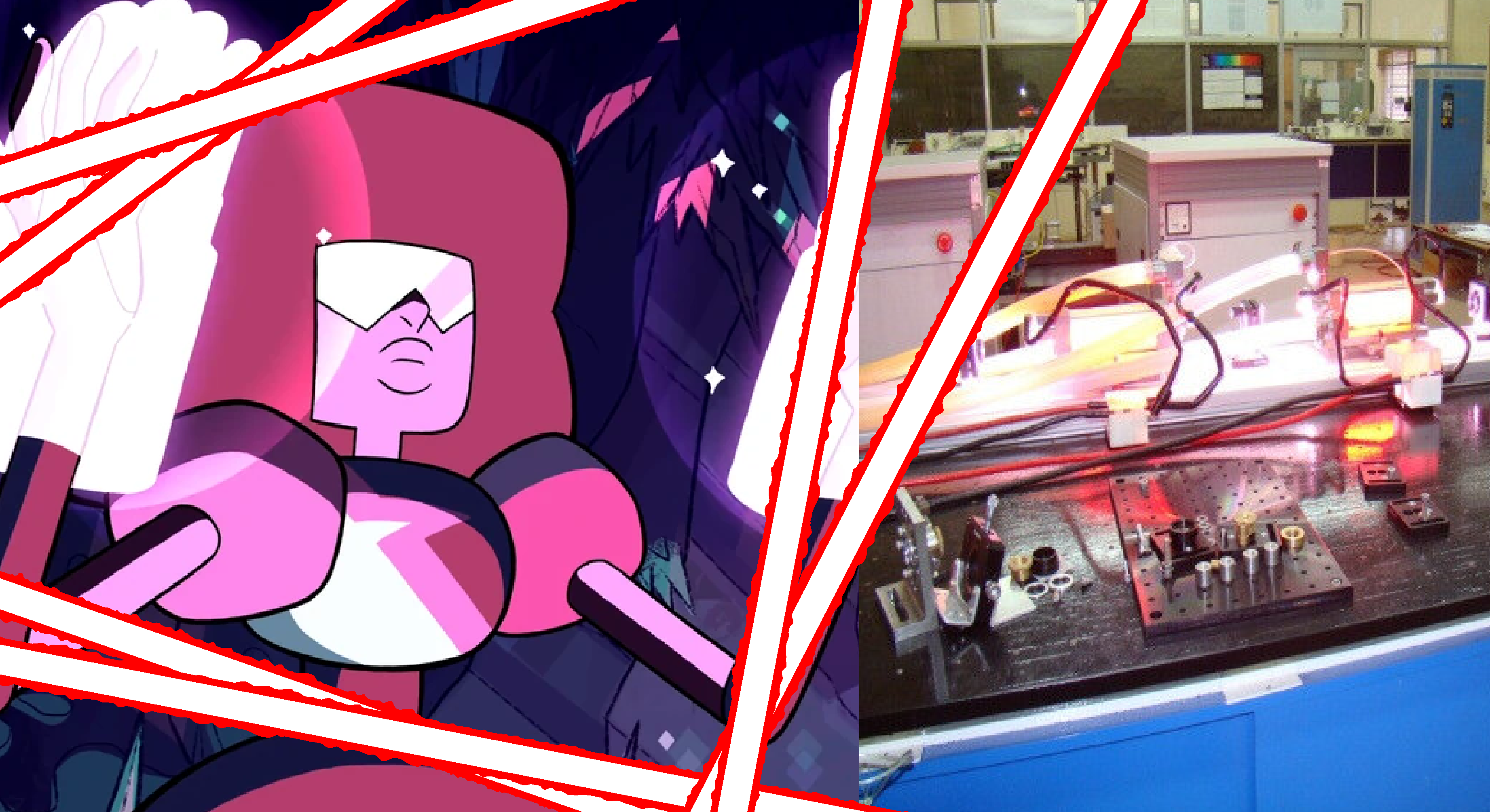
Combined, the laser power duo Ruby and Sapphire turn into another god-tier laser gem, Garnet. In fact, garnets in various forms can make intense pulsed lasers of all colors. They’re used in dentistry, hair removal, research, and more. Ruby, sapphire, and garnet are such great laser materials that I can’t help but wonder whether this is why writer Rebecca Sugar associated them with each other. Garnet’s even wearing laser goggles! I propose there should be an entire new set of Garnet characters with various impurities and colors, each with specific powers.
Alexandrite
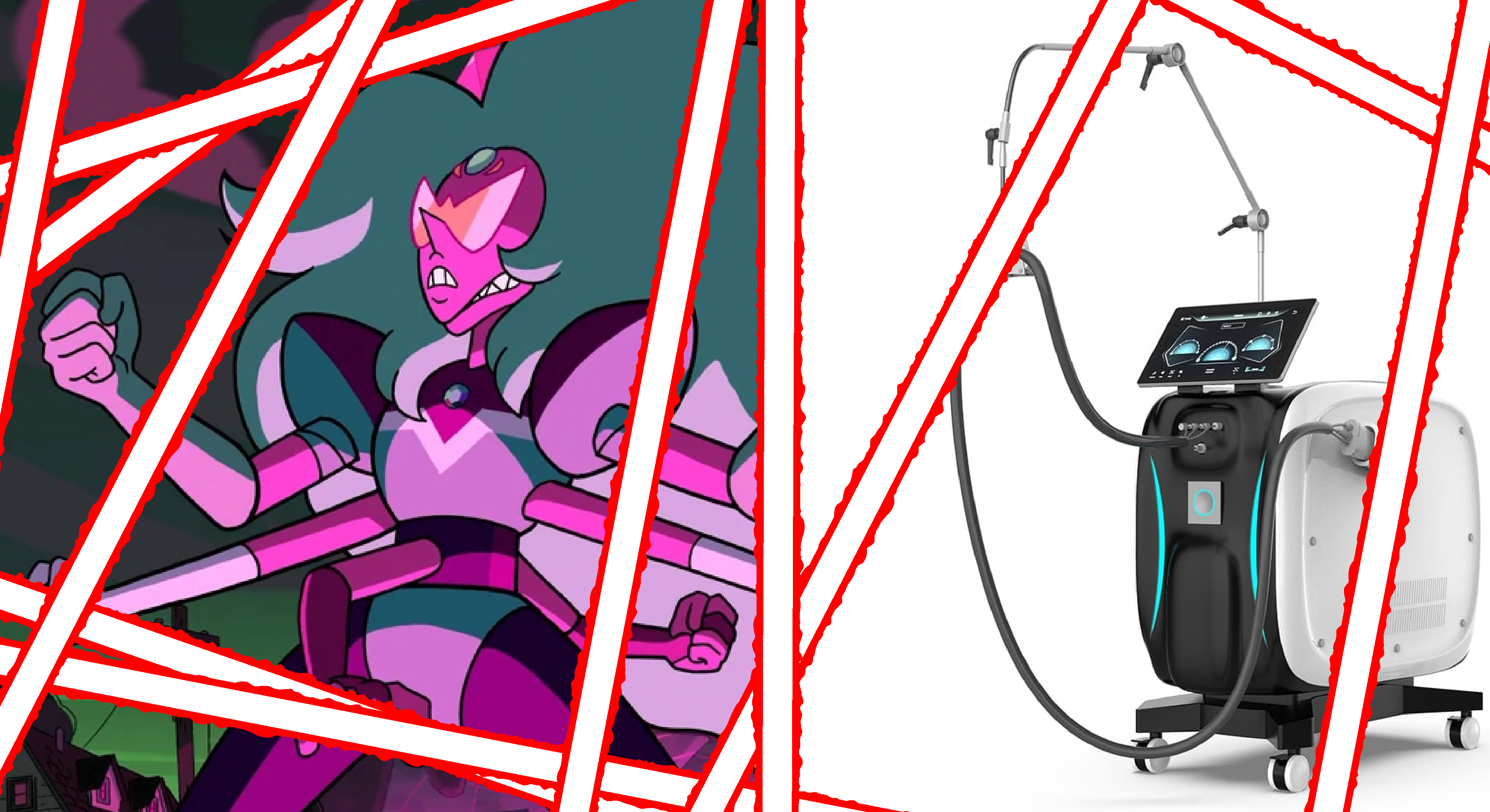
In the show, Garnet combines with Amethyst and Pearl to make a giant being that happens to be another great laser crystal. Alexandrite can emit high-energy pulses of infrared laser light, used in laser hair removal.
I’m not done with laser gems, though! There are a couple of other minerals that aren’t currently in Steven Universe, but since they are laser materials I propose they should be in future series. These are:
Perovskite
As a mineral, perovskite makes grey, shiny materials. There are perovskite lasers in research labs, where people love that they are highly customizable. If Perovskite were a character, she’d be an A-tier laser material.
Xenotime
The mineral xenotime makes very cool-looking brown-marbled black crystals that are sometimes radioactive. It’s a major source of the element erbium. Erbium-doped glass fibers make powerful lasers and laser amplifiers, which is why we need a Xenotime character so she can fuse with Desert Glass and be very powerful.
Wakefieldite (also known as ytterbium orthovanadate)
As a mineral, wakefieldite makes small crystals whose color varies from yellow to pink to brown to black based on the exact elements involved. It makes extremely powerful pulses of infrared light, and is used for machining. Wakefieldite would be a rare but bonafide S-tier.
Conclusion
There is a clear difference between the different laser gems, allowing me to easily rank them into tiers. The S-tier results in particular leave me with one question: is writer Rebecca Sugar into lasers? Because if not, it’s a huge coincidence!
Let me know if I left any major characters out of the ranking!


